
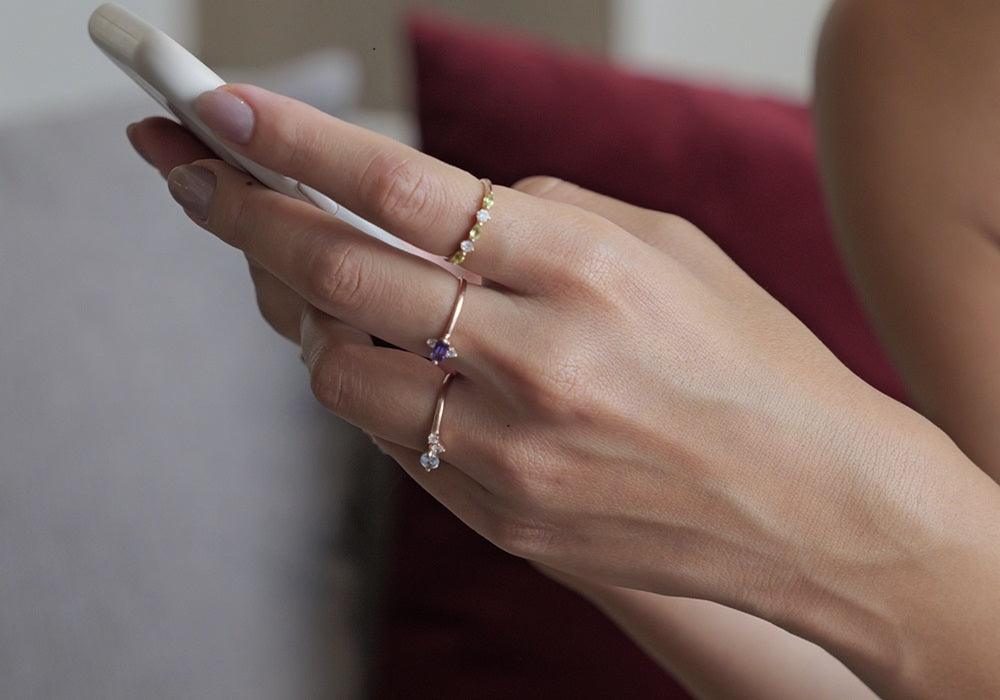
JEWELRY BUYING GUIDE
Buying jewelry can feel overwhelming, but it does not have to be. With the right information, you can choose a piece that matches your style, budget, and expectations. This guide explains the main gemstone, metal, and diamond options to help you make a confident purchase.
Gemstone Varieties
Gemstones come in different types, including natural, lab-created, and imitation stones. Understanding the difference can help you choose the right piece of jewelry.
Natural Gemstones
Natural gemstones are formed in the earth or created from organic materials. They are cut, polished, and used in fine jewelry. Jewelers often evaluate gemstones based on color, clarity, cut, and sparkle.
Some natural gemstones may be treated to improve their color or clarity. Heat treatment is common and usually permanent, but other treatments may require special care or may not be permanent. It is always a good idea to ask about the gemstone’s origin, quality, and any treatments before purchasing.
Lab-Created Gemstones
Lab-created gemstones are grown in a controlled laboratory environment. They often have the same physical and visual qualities as natural gemstones and can look almost identical.
However, lab-created gemstones are generally less rare and less valuable than natural gemstones. A qualified gemologist can help identify the small differences between natural and lab-created stones.
Imitation Gemstones
Imitation gemstones are made to look like real gemstones but are created from different materials, such as glass or cubic zirconia. They do not have the same rarity, value, or natural properties as genuine gemstones.
While imitation stones can be attractive and affordable, they should not be confused with natural or lab-created gemstones.
Jewelry Metals
Fine jewelry is commonly made with precious metals such as gold and silver. For gold jewelry, 9K, 14K, and 18K gold are popular choices. The main difference between them is the percentage of pure gold.
9K Gold
9K gold contains 37.5% pure gold and 62.5% alloy metals. It is a durable and affordable option, making it suitable for everyday wear. Because it contains a higher percentage of alloy metals, 9K gold is more resistant to scratches and dents than higher-karat gold.
14K Gold
14K gold contains 58.5% pure gold and 41.5% alloy metals. It offers a good balance between beauty, durability, and value. Because it is harder than 18K gold, it is often used for detailed rings and jewelry designed for daily wear.
14K gold is a great choice for people with active lifestyles or those who work frequently with their hands.
18K Gold
18K gold contains 75% pure gold and 25% alloy metals. It has a richer gold color and is often considered more luxurious. It is a popular choice for engagement rings and fine jewelry worn on special occasions.
Because it contains more pure gold, 18K gold may also be a better option for people with sensitive skin.
Gold Colors
White Gold
White gold has a beautiful silvery-white appearance. It is often plated with rhodium to enhance its shine, brightness, and durability.
Yellow Gold
Yellow gold is a classic and timeless choice with a warm golden glow. It is perfect for traditional and elegant jewelry designs.
Rose Gold
Rose gold has a soft pink tone created by mixing gold with copper alloys. It is a romantic and modern choice for rings, earrings, and necklaces.
Diamond Varieties
Our jewelry collection includes different diamond alternatives and diamond options, including natural diamonds, lab-grown diamonds, and moissanite.
Natural Diamonds
Natural diamonds are formed deep within the earth and mined from different locations around the world. They are valued for their rarity, durability, and timeless beauty.
Natural diamonds are generally more expensive than lab-grown diamonds or moissanite, but they tend to retain their value better over time.
Lab-Grown Diamonds
Lab-grown diamonds are created in a controlled laboratory environment. They have the same chemical composition, hardness, and durability as natural diamonds. They can also be certified by respected organizations such as GIA or IGI.
Lab-grown diamonds are usually more affordable than natural diamonds. However, they may not hold their value as well as natural diamonds.
Moissanite
Moissanite is made from silicon carbide. Natural moissanite is extremely rare, so the moissanite used in jewelry is usually lab-created.
Moissanite is known for its exceptional brilliance and often reflects more rainbow-like sparkle than diamonds. Diamonds usually reflect a whiter light, while moissanite can appear more fiery.
Moissanite is also very durable, with a hardness of approximately 9.25 to 9.5 on the Mohs scale, compared to a diamond’s hardness of 10. It is a beautiful and affordable alternative for those who want sparkle and durability at a lower price.
JEWELRY SUGGESTIONS TAKE A LOOK AT OUR COLLECTIONS